
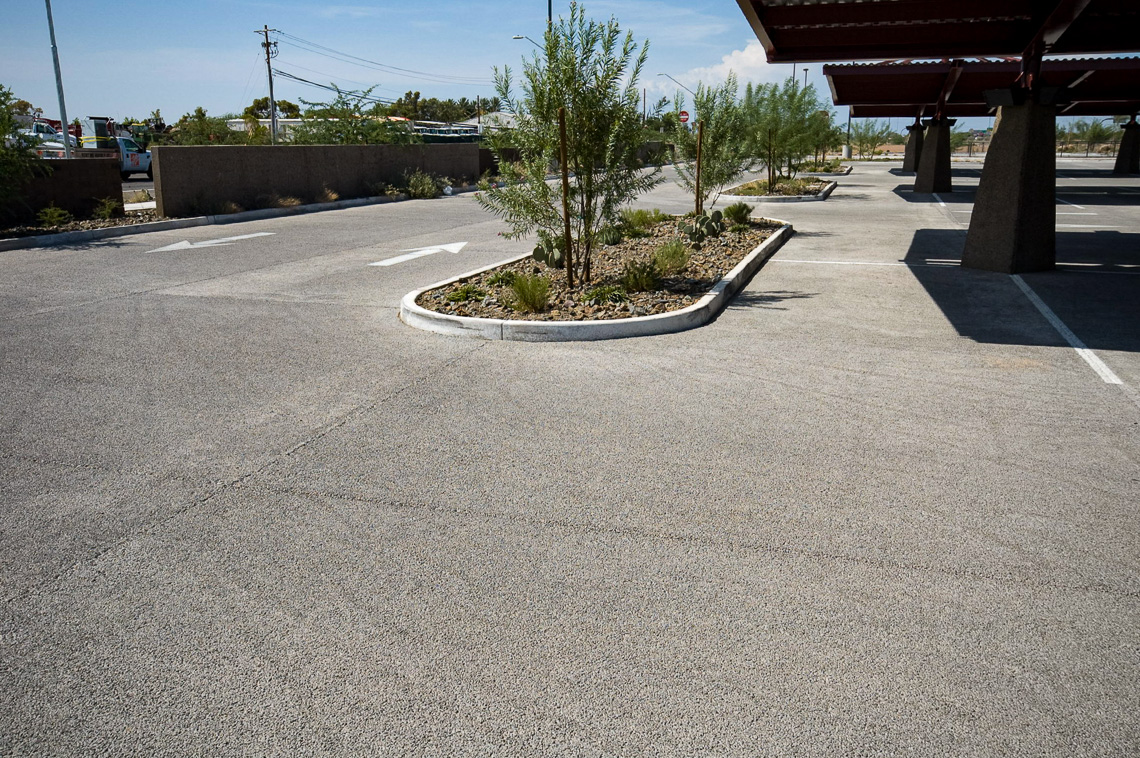
Heavy trucks can operate on pervious concrete, but only under specific engineering and operational conditions. Standard pervious mixes are generally too brittle to withstand heavy loads and turning forces. To ensure durability, the following limitations must be managed:
- Speed Constraints: High-speed traffic accelerates surface deterioration due to tire friction; usage should be restricted to low-speed, straight-line zones.
- Structural Strength: Pervious concrete has a lower compressive strength (500 psi to 4,000 psi) compared to standard commercial concrete (4,000 psi to 6,000 psi). We recommend a minimum of 3000 psi here in the North East.
- Surface Raveling: Turning or braking forces from heavy vehicles create intense shear stress, which causes aggregate pieces to break loose (raveling). However, in parking lots it has been used successfully.
- Design Requirements: For high-load vehicles like fire trucks or buses, the pavement requires a deeper, highly engineered subbase and a thicker pour—typically 8 inches or more.
- Traffic Frequency: Regular use by heavy delivery or waste management trucks will cause premature cracking, shearing, and structural failure.